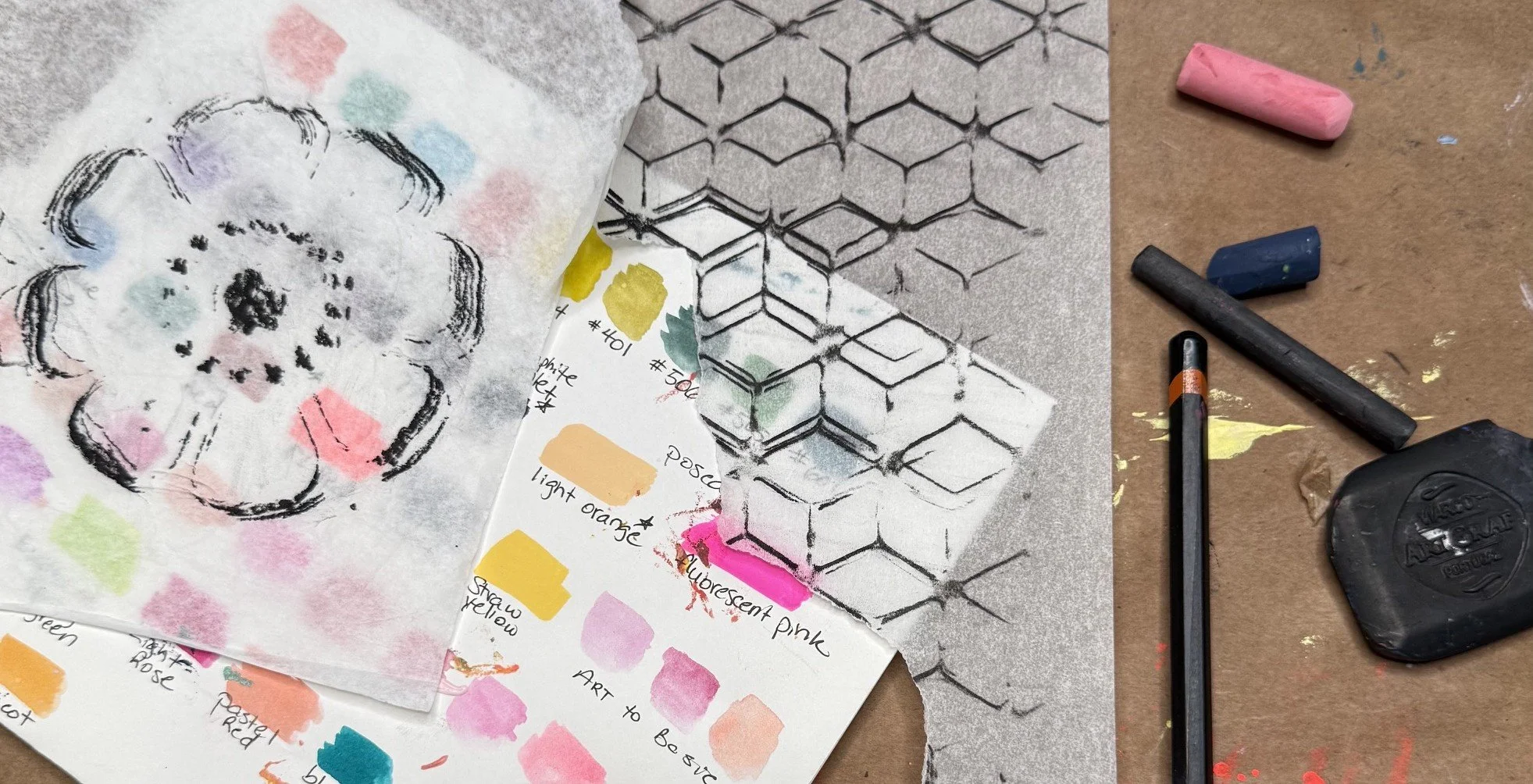
Have you ever looked at the pattern on a restaurant’s patio chair, a rusty gate with a cute flower, or a brick wall and thought, that would make an interesting mark in a painting?
No? You’re going to leave me here by myself?
Well, I'm about to give you another reason to stop and look at all the little details around you.
One of my favorite ways to collect inspiration is through texture rubbings. It's a simple technique that lets you capture the patterns, lines, and textures of everyday objects and turn them into something you can use in your art.
And the best part? You probably already have everything you need.
What Exactly Is a Texture Rubbing?
Remember placing a piece of paper over a coin when you were a kid and rubbing a crayon across it to reveal the design?
Same idea. Only now we're using it to make some pretty interesting art.
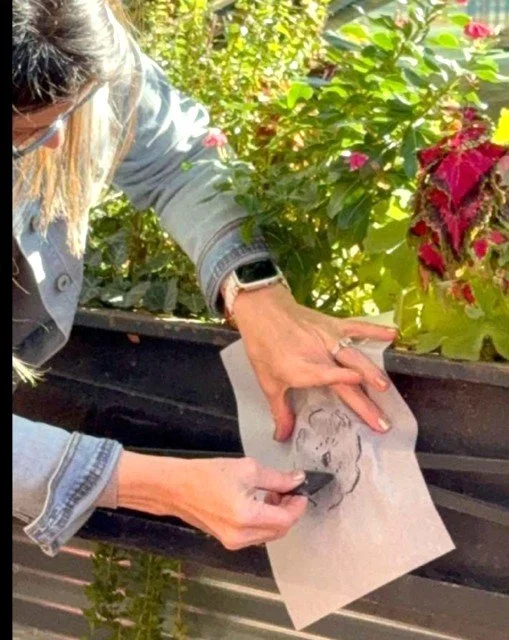
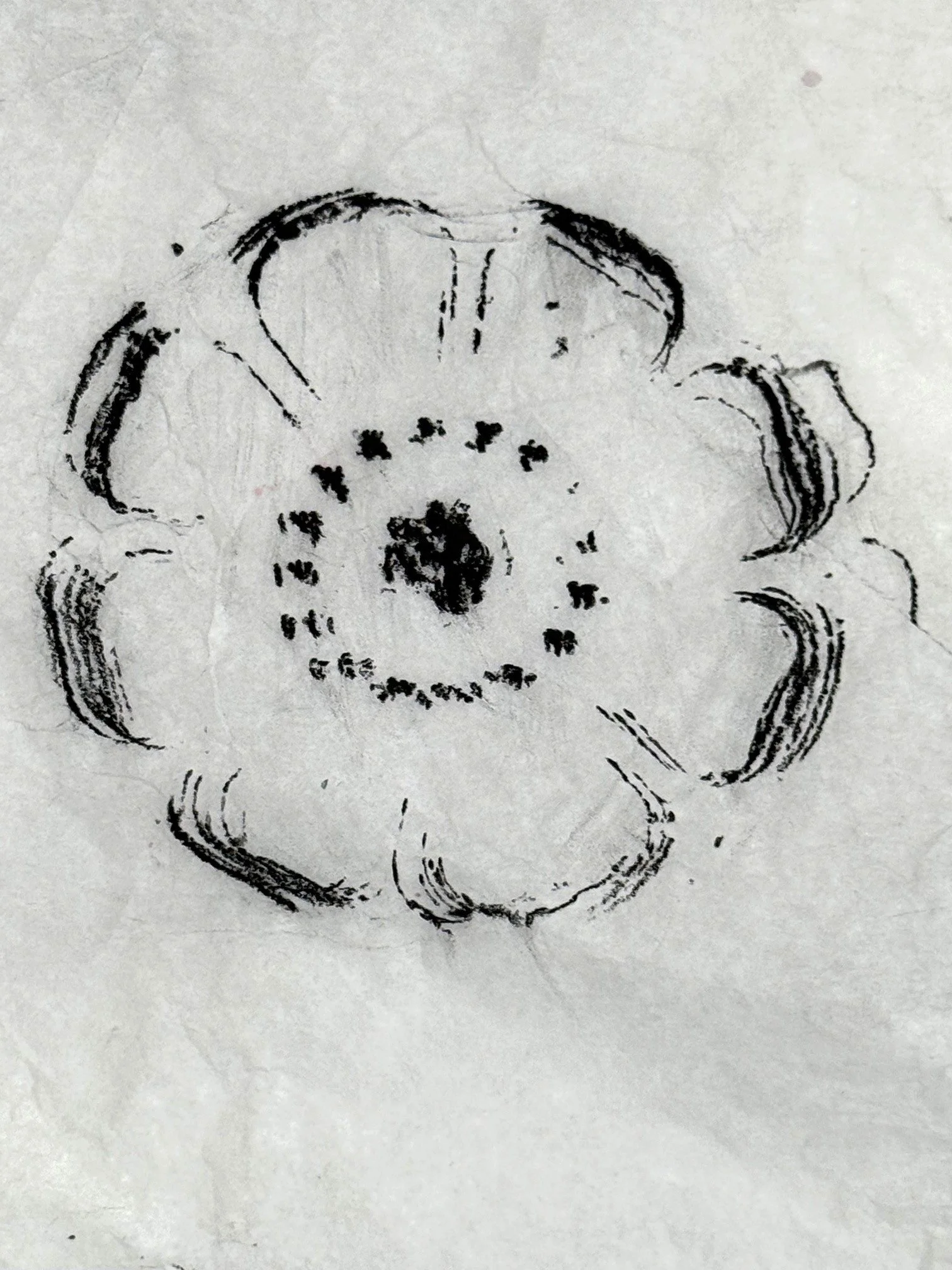
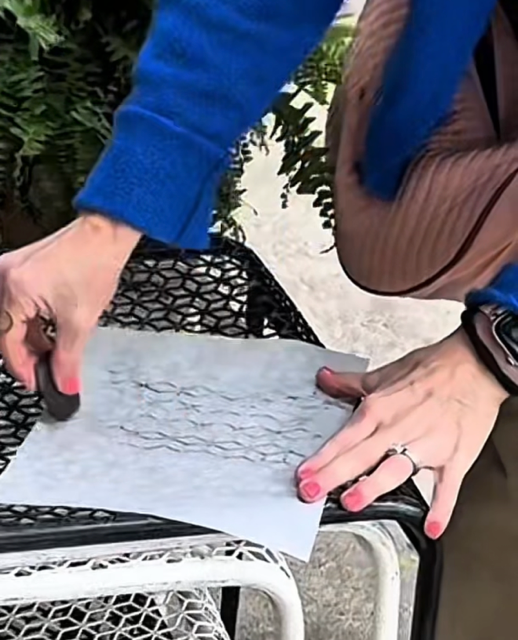
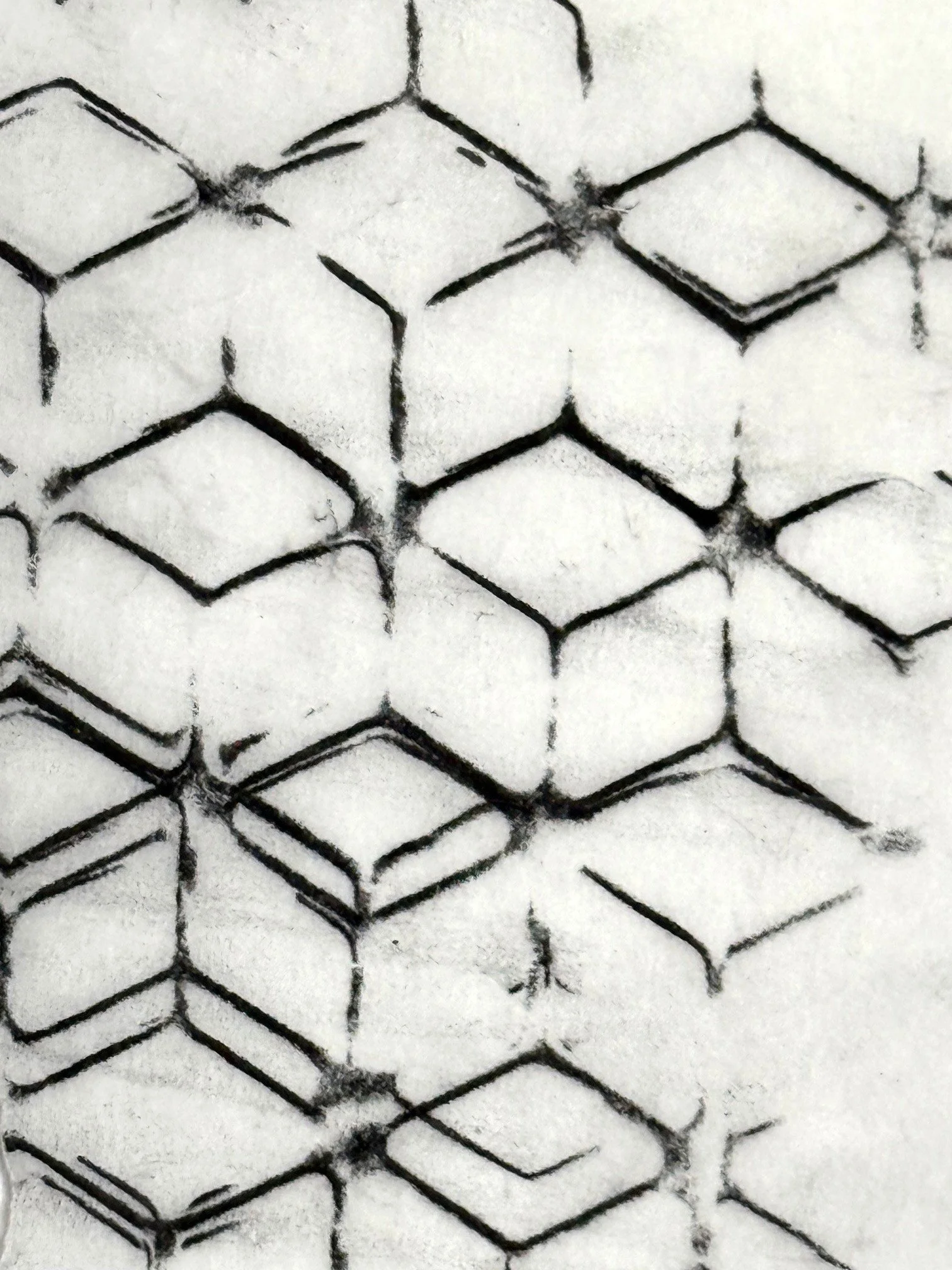
A texture rubbing, sometimes called frottage, is created by placing paper over a textured surface and rubbing a drawing material across it. The raised areas underneath leave their impression on your paper.
Depending on the surface and the material you're using, you might end up with delicate lines, bold geometric patterns, or wonderfully messy marks.
I especially love the imperfect ones. The broken lines, uneven pressure, and unexpected gaps give the marks so much character.
Where Can You Find Interesting Textures?
Practically everywhere!
That's what makes this such a fun creative exercise. You don't need to travel across the world to find inspiration. Your own neighborhood can be full of interesting surfaces.
Here are a few places to start looking:
Around your neighborhood: Sidewalks, brickwork, textured concrete, and metal grates.
In nature: Tree bark, leaves, and other interesting natural surfaces.
Around your home: Woven placemats, textured wallpaper, cardboard, and patterned household objects.
On your adventures: Architectural details, interesting surfaces, and unexpected patterns that remind you of a particular place.
Of course, be mindful of where you're collecting rubbings. Ask permission when appropriate, and avoid fragile or protected surfaces.
My Favorite Tools for Making Texture Rubbings
You don't need fancy equipment to get started.
A few sheets of paper and something to make marks with will do the trick.
Graphite, charcoal, ArtGraf, and soft pastels are all fun to experiment with. Each creates a slightly different effect.
I especially love materials that let me work quickly and loosely. I'm not trying to create a perfect reproduction of the surface.
A little tip: Try using the side of your drawing material rather than the point. You'll cover more of the surface and often reveal patterns you might otherwise miss.
And don't be afraid to experiment with different papers. Thin papers can be especially good at picking up subtle details. Just be gentle so they don't tear. My favorite? Tracing paper!!
Now What Do You Do With All Those Rubbings?
This is where things get really fun.
A rubbing doesn't have to remain a rubbing. It can become part of an entirely different piece of art.
You can tear it into pieces and add it to a mixed-media collage. If you used transparent paper, it will look awesome as a top layer in art. Or look at the marks you've collected and use them as inspiration for new lines and shapes in a painting. *also, if you are really in love with the rubbing, take a high quality photo of it and save it in your phone so you can reuse it later.
The goal isn't necessarily to recreate the surface you found. It's to take something interesting from the experience and make it your own.
That's one of my favorite things about mixed-media art. A little discovery made during an ordinary afternoon can become the beginning of something completely unexpected.
Your Creative Side Quest: Go Texture Hunting!
Here's a little challenge for your next adventure.
Grab some paper and a favorite mark-making tool. Take a walk, explore your backyard, or wander around your house looking for interesting textures.
Collect three different rubbings.
When you get back to your studio, ask yourself ‘which marks am I drawn to?’ Are there patterns you’d like to repeat?
Choose one and incorporate in your current work and make an art journal page. Put the rubbing right in your work, or play with your own marks inspired by the texture.
Want to know my favorite tool for making rubbings?
I created a short short reel to show you five different mark-making tools and which one is my favorite to take with me on my outings!
Now get out there and have yourself an adventure!